Introduction: Why I Turn To Doodle Art To Unwind
I’m Jordan, a college student in Hamilton, Ontario, and I doodle in a pocket notebook between classes and on the bus home. Most of what I draw are small abstract shapes, repeated lines and patterns that fill a playing-card-sized frame before my timer rings. I am not trained in art or therapy. Doodling works for me because I give it a small routine: one pen, a tiny space, a few simple shapes and a timer set to ten minutes. That is the whole method.
Doodle art is spontaneous lines, abstract patterns and shapes that appear while the mind drifts. Think of the margins of lecture notes, the corners of agendas, the back of a receipt. It connects to process art, where the act of drawing matters more than a perfect finished piece. Doodling allows for creativity without needing advanced artistic skills, and that is what makes it stick as a daily habit.
Here is what I get out of it:
-
Stress relief after a full day of classes
-
Gentle focus that replaces phone scrolling
-
Creative self-expression with zero performance pressure
-
A wind-down ritual I can repeat anywhere, on any surface
This article is published by Draw to Unwind. The goal is practical ideas you can try today with a pen and a scrap of paper.
What Exactly Is Doodle Art?
Doodle art consists of spontaneous, unstructured drawings: lines, curves, scribbles, icons and abstract patterns that fill page margins, notebooks or loose sheets. The Wikipedia entry on doodles describes them as simple drawings that can have concrete representational meaning or be composed of abstract shapes, and I like how loose that definition is. A 2025 scoping review in the arts research literature defined doodling as “spontaneous graphic mark-making, made without intentional cognitive effort or a predetermined outcome, in a playful style unique to each individual.”
What separates a doodle from a formal drawing? Doodles are quick, forgiving, repetitive and goal-free. Nobody grades a doodle. The soothing value comes from the motion, not from showing the result. Doodle art connects subconscious thought with visual design; the pen moves, and whatever is running through your brain shows up as random lines, spirals, grids, checkerboards, clusters of circles or plant-like forms. You might see these in a lecture-note margin, a bullet journal or the back of a meeting agenda.
My own definition: doodle art is the habit plus a tiny bit of structure (a frame, a limited toolkit and a stopping point), so it feels like a finished little creation instead of scribbles I forget. The structure is not about skill. Doodling allows for free-form marks, patterns, or illustrations without rigid rules.
Doodle Art As A Gentle Therapeutic Practice
Last Tuesday I had three back-to-back lectures and a group project that went sideways. On the bus afterward, I opened the notebook, drew nested circles for ten minutes, and by the time I looked up I had missed my usual doom-scrolling window. My shoulders were lower. That is the version of “therapy” I can speak to.
Doodling engages the brain’s default mode network, the same system active during light meditation, and that process can calm racing thoughts. I am a doodler, not a scientist, but the research I have read supports what I feel: a 2025 scoping review found that evidence “consistently suggests that doodling positively impacts affect.” Nearly two-thirds of doodlers recall using it during tense moments. Doodling can lower cortisol, the stress hormone, and it provides a welcome distraction from negative thoughts. In a 2009 study by Jackie Andrade, participants who doodled while listening to a monotonous message remembered about 29% more on a surprise recall test than those who sat idle. Doodling helps maintain attention during long meetings or a boring lecture instead of harming it.
Doodling serves as a low-cost, self-directed practice that complements but does not replace formal art therapy. It is especially useful for people intimidated by “serious” art, because there is no wrong way to doodle, which helps enhance creative confidence.
A few emotional uses I come back to:
-
Jagged, sharp lines to discharge anger or frustration
-
Soft loops and gentle arcs to settle nerves
-
Dense crosshatching or shading to burn off nervous energy
-
Filling a small area with tiny dots when I need something repetitive and slow
Doodling can reduce stress and anxiety levels, and it can be a form of meditation and relaxation. I stop when my timer rings. There is no obligation to finish the page.
A Brief History Of Doodling As Human Mark-Making
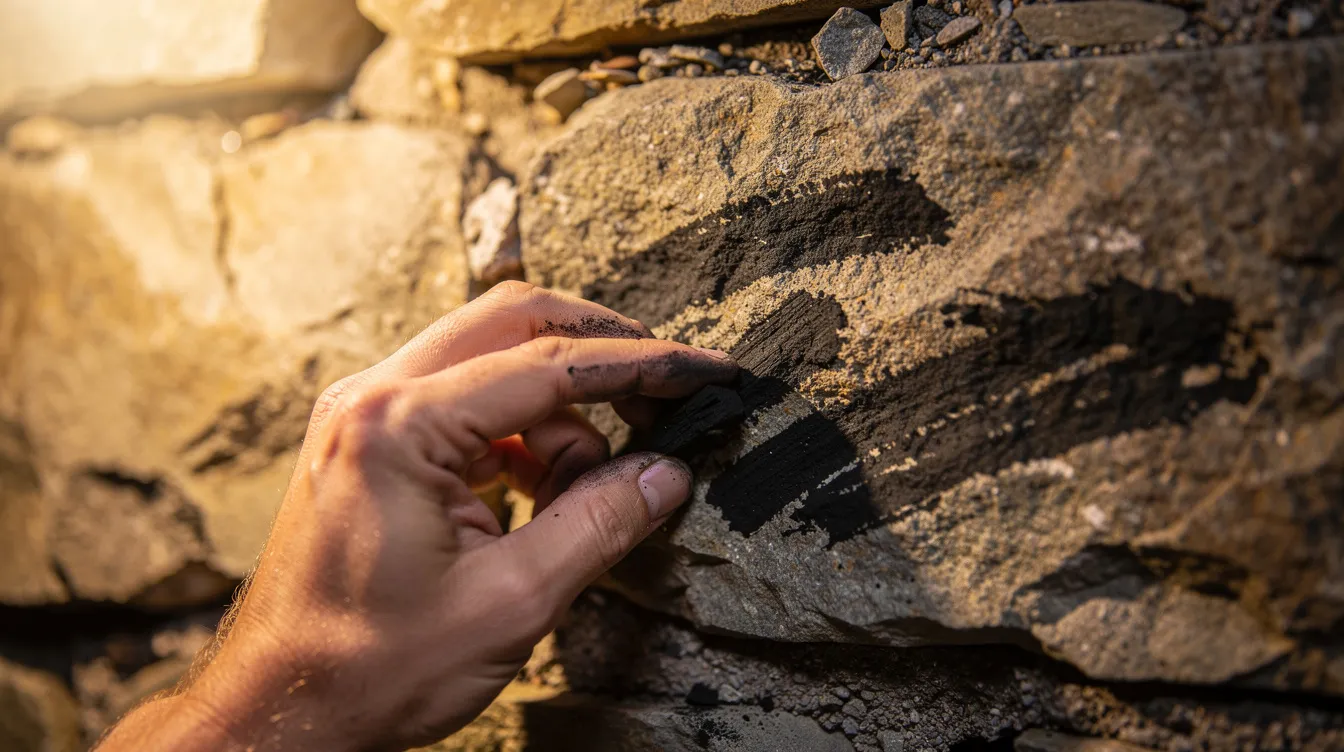
When I fill a notebook margin with spirals, I am doing something humans have done for a very long time. I am a hobbyist, not a historian, but the timeline is worth knowing. Doodling dates back 500,000 years to cave markings, simple scratches and handprints on stone walls. Children left doodles in Tibet 200,000 years ago. In 13th-century Novgorod, a boy named Onfim doodled in his school notes, mixing lessons with drawings of warriors and horses. Alexander Pushkin’s notebooks contain numerous doodles alongside his drafts. Doodling appears in the works of Leonardo da Vinci, scattered among his engineering sketches. Many U.S. presidents, including Reagan and Clinton, doodled during meetings. Many artists across centuries have left spontaneous marks in their working papers.
The Surrealists in the 1920s formalized something related: automatic drawing, the practice of letting the hand move without planning the result. I am not claiming my bus doodles are Surrealism, but it helps to know that following the pen without a plan has a long history in art. The word “doodle” only became common in English in the 19th and 20th centuries, while the behavior itself is far older. A doodle today continues a very old practice of turning feelings into lines and symbols.
The Basics: Lines, Shapes, And Abstract Patterns
Everything in doodle art comes from simple building blocks: line direction, pressure, spacing and a small set of basic shapes. Circles and lines form the foundation of doodles, and from there you build upward.
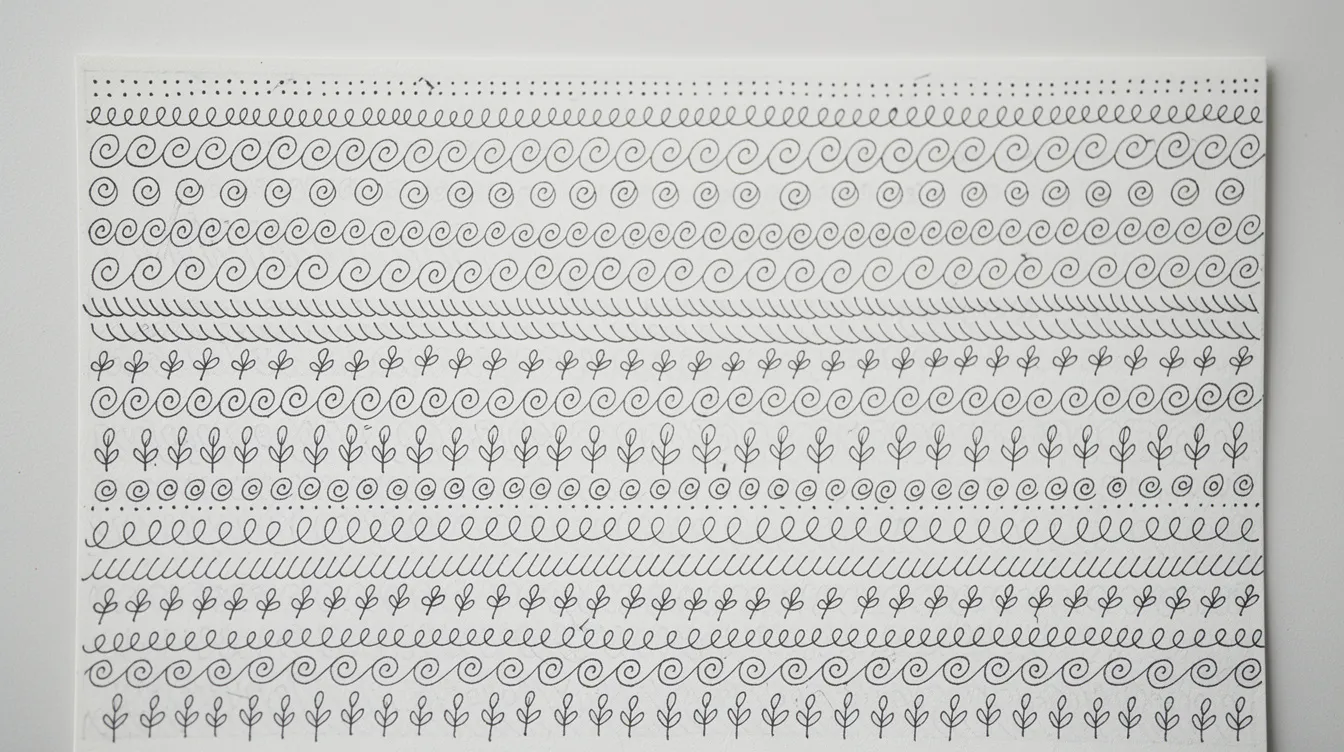
Line types to practice: straight, wavy, zigzag, dashed, nested curves. Core shapes: circles, ovals, triangles, squares, teardrops, leaves. These are geometric shapes and organic forms that, when repeated and rotated, quickly become abstract patterns like checkerboards, spirals inside squares and overlapping circles. Basic shapes like these form a strong foundation for any style of doodling.
My best trick: before I start, I pick just three simple shapes I can draw without thinking, such as a circle, a line and a teardrop. Limiting the vocabulary means I cannot freeze up over what to draw. This constraint removes decision fatigue and speeds the process.
Small variations in spacing and scale give patterns life. Alternate thick and thin lines. Add one variation at a time, like a ring around each circle, so the page stays coherent. Techniques used in doodling include stippling, hatching, and continuous line drawing, all of which add textures and details to otherwise flat shapes. Repetition and improvisation are key techniques in effective doodling.
For readers who want a more structured cousin of this frame-and-repeat method, Zentangle involves structured patterns within defined spaces. I have a longer walkthrough on draw Zentangle patterns step by step.
Daily drill: fill a quarter of a page with one pattern. That is enough.
From Process Art To Personal Ritual: Making Doodling Part Of Your Day
Process art means attending to sensation, rhythm and curiosity instead of judging the result. Doodling is an expressive art form that combines mindfulness and creativity in exactly this way. The beauty is in the act, not the artwork.
I tie doodling to something I already do, so I do not need motivation. On the bus I open the notebook before my phone. After a lecture I draw for five minutes before packing up. Doodling can be done while listening to music or during everyday tasks, which makes it easy to layer onto an existing routine. The notebook and pen live in the same pocket, so there is nothing to set up.
Routine ideas that work in short blocks:
-
A weekday “pattern-of-the-day” habit, five minutes per session
-
A Sunday page of free-flowing shapes as a weekly reset
-
Pairing doodling with soft music, tea or a brief breathing exercise
I encourage a dedicated notebook with dated pages. Flipping back after a month quietly shows how your shapes changed, and I find that more satisfying than any single drawing. Doodling can help improve creativity and problem-solving skills over time, and a dated archive makes that progress visible.
Mindful Doodling Techniques For Relaxation
These techniques help doodle art double as a calming practice at the end of a busy day. They are not rigid rules; adapt them to your energy and schedule.
My ten-minute session looks like this: draw a frame about the size of a playing card (wobbly is fine), pick three shapes, start in a corner and repeat slowly, add one layer of variation, add light hatching if I like, then stop when the timer rings. Doodling emphasizes the process over the finished product, so I never go back and “fix” a page.
Other exercises I rotate through:
-
Slow lines: draw deliberate lines from one edge to the other, matching each stroke to a slow inhale or exhale. This pacing lowers arousal and shifts focus to the body.
-
Breathing waves: inhale while drawing an upward curve, exhale on a downward curve. Repeat until the page fills with gentle wave patterns.
-
Thought parking lot: capture a worry as a simple shape in a corner, then surround it with soothing patterns to contain it visually. This is a form of play that turns an anxious thought into something you can look at from the outside.
-
Motif focus: choose one motif, such as nested squares or petals, and draw nothing else for five minutes. This trains soft, sustained focus.
The no eraser rule in doodling encourages embracing mistakes as part of the art. A wobbly line stays. A lopsided circle stays. That is the point.
Simple Doodling Ideas You Can Try Tonight
Pick up a pen while you read this. Grab any piece of paper. Here are the doodling ideas I come back to most, from easiest to slightly harder:
-
Stacked wavy lines with a dot between each pair
-
Overlapping scales, like fish skin
-
Petal circles radiating from a center dot
-
Grid squares with diagonals alternating direction in each cell
-
Leaf branches growing from a single curved stem
Different styles of doodling include abstract, character-based, and floral designs. You can explore all of them with the elements above. For scene prompts, try a page of tiny houses built from rectangles and triangles, a sky of circles that morph into planets, interlocking maze paths, or irregular blobs each filled with a different pattern. Mandala doodles feature radial symmetry and geometric shapes if you want a centered, meditative page. Cartooning doodles help practice character drawing skills, even simple cartoon faces. Lettering involves creating decorative styles of letters and words, which can become its own form of doodling. Abstract doodling allows for spontaneous and free-flowing designs with no plan at all.
Themed prompts for a student’s day: lecture-margin crosshatching, or a page titled “Today’s Energy” drawn only with shapes that feel like the day you just lived. Common themes in doodling include nature, characters, and geometric shapes, so let inspiration come from what is around you.
These work with whatever is at hand. Keep favorite prompts on the inside cover of your notebook so a blank page never meets a blank mind.
Tools, Color Choices, And Making It Easy To Start
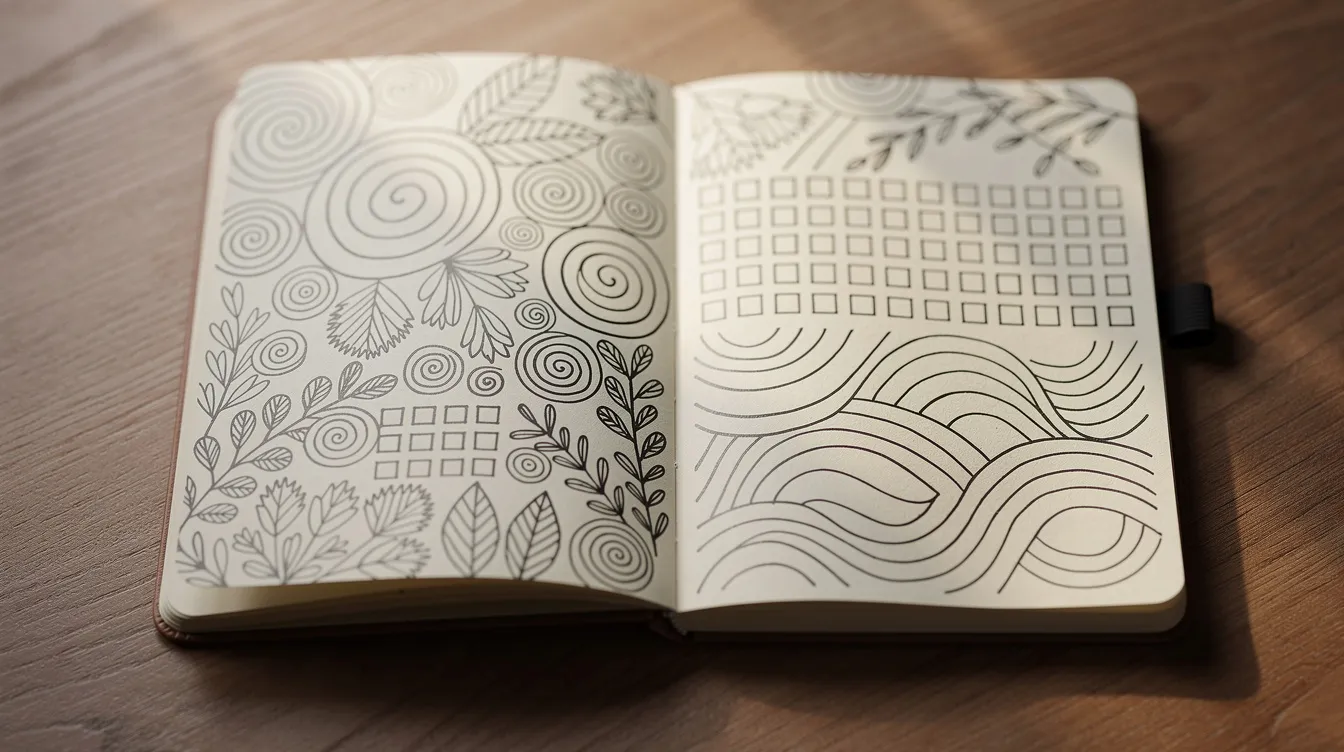
When I first tried to doodle “properly,” I bought a big sketchbook and stalled for weeks because every page felt like it had to be worth the paper. Shrinking everything fixed it. Doodling art can be done with minimal supplies like paper and basic pens.
My cheap kit:
-
A pocket notebook, blank or dot grid, paper around 100gsm
-
One black 0.4 or 0.5 mm fineliner, so there are no decisions about tools
-
An optional pencil for a light frame
-
A phone timer
Common tools for doodling include pencils, markers, and pens. A gel pen, soft graphite for shading, or a small set of colored pencils are optional extras once you are comfortable. Watercolor can add a wash of color behind ink lines, but I would not start there. My Start Here page collects how I choose inexpensive pens and notebooks, for readers who want the basics in one spot.
Black and white versus color: monochrome feels calm and minimal. A limited palette like three blues and a gray adds gentle mood shifts without decision fatigue. I suggest staying monochrome for the first week, then adding muted colors if it feels enjoyable. Doodle art can be created using simple shapes and patterns with any of these tools.
Do not wait for perfect tools. Many pages I like best were made with whatever pen was closest.
Abstract Shapes To Simple Scenes: Growing Your Style Over Time
Many people quietly develop their own style of doodling over months, even if they never showcase their pages to anyone. You start to discover preferences: some people repeat geometric patterns, others fill pages with organic shapes, faux letters, imaginary plants and cities. A gradual progression works well. Start with pure abstract shapes, then let tiny objects appear: cups, windows, stairs, or leaves hidden among the lines. Different techniques emerge as you experiment with what feels natural.
What I got wrong at first: planning a layout so doodling felt like homework, using too many tools at once, comparing my pages to polished intricate designs online, and treating a lopsided page as a failure. Now I date every page and keep the bad ones, because a notebook of imperfect pages is more useful than one with three tidy drawings. Doodling can help generate new ideas and explore techniques precisely because there is no pressure to produce something worth framing.
Ways to track growth: date every page, revisit an old prompt after a month, or dedicate one notebook to abstract patterns only. Doodle art can enhance creativity and problem-solving skills over time, and flipping back through a full notebook is where you see it. Common themes in your work will teach you what your brain reaches for when given freedom.
View doodles as a private archive of moods and expressions, not a portfolio. My rule is no posting a doodle the same day I make it. Every line drawn while winding down is part of a longer creative journey. The world does not need to see it for it to matter. Doodling is used as a tool for relaxation and self-care, and keeping it private protects that purpose. The endless possibilities in a blank page are what inspire the next session.
FAQ
Do I need to know how to draw to start doodling art? No. If you can make a circle, a line and a dot, you have enough. The method relies on repetition and simple shapes, not realistic drawing skills. Doodling allows for creativity without needing advanced artistic skills.
What pen is best for doodling? I like a black fineliner between 0.3 and 0.5 mm for clean lines that do not smudge easily, but any pen you enjoy holding works. Try a few cheap ones before spending more.
How long should a doodle session be? Five to ten minutes is a good start. A short, fixed time keeps it light and easy to repeat.
Should I use a pencil first and erase mistakes? I mostly skip it, since drawing straight in pen keeps me from fussing over perfection and wobbly lines become part of the charm. If you want a guide, use a light pencil frame only.
What do I do with finished doodles? I leave them in the notebook. Some people cut them out for cards or bookmarks, but keeping them private means no pressure to make the next one better.